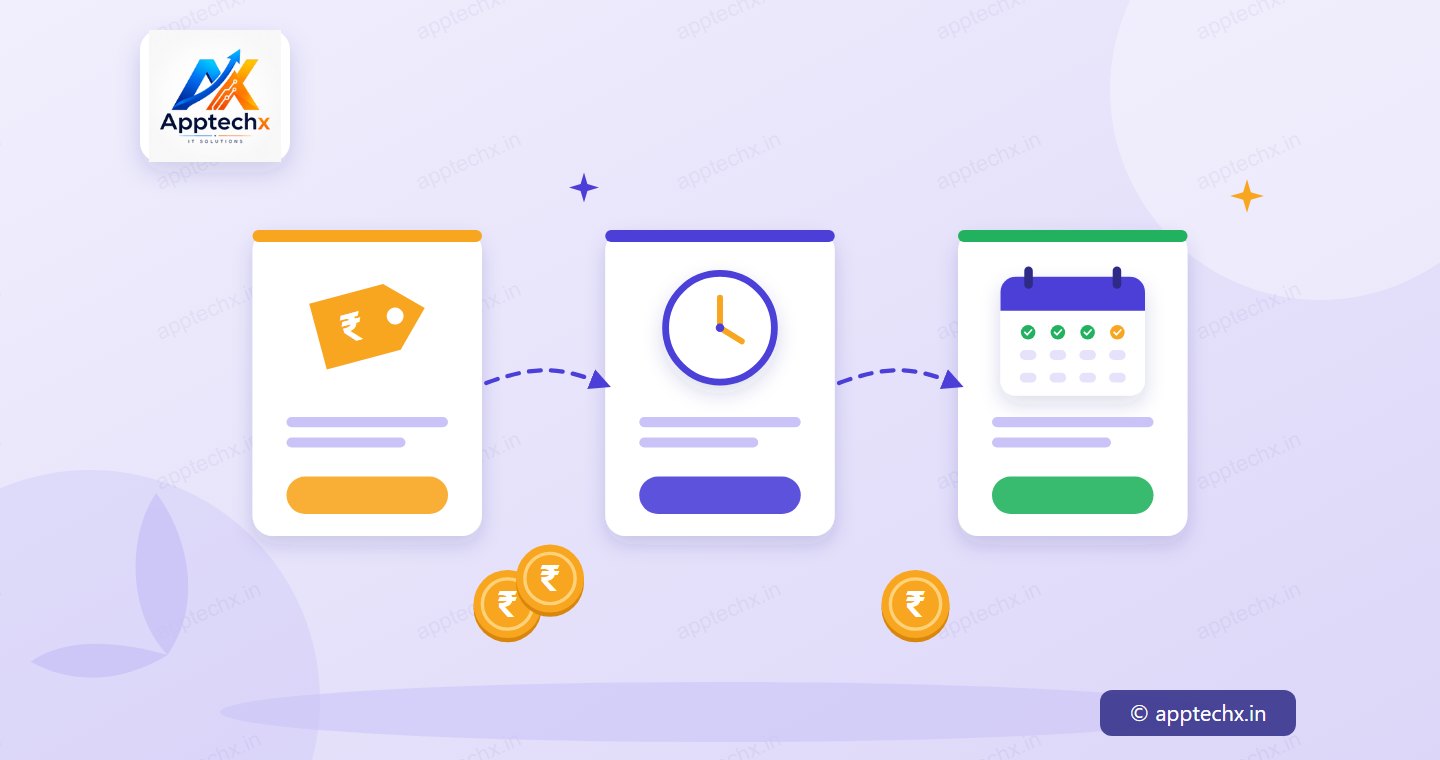
When you hire someone to build software, the price is only half the conversation. The other half is how you pay: one fixed amount, by the hour, or a monthly fee. Each model pushes both sides to behave differently, and picking the wrong one causes more fights than bad code does.
We’ve worked under all three, as the developer and sometimes as the client buying services ourselves. Here’s how each one really works, who it suits, and what to put in writing.
Fixed price: one scope, one number
You agree on exactly what will be built, and the developer quotes one total, usually split into milestones.
Why people like it: you know the cost before you start, which matters a lot when you’re spending your own savings or need approval from a partner.
Where it goes wrong: the scope. If the scope is vague (“an app like Urban Company”), the developer either quotes high to protect themselves or quotes low and then argues over every small addition. “Is a filter by price part of search, or a new feature?” These arguments are tiring for everyone.
Works best when: the project is clearly defined, like a website, a first version of an app with a written feature list, or a specific integration. Our one-page app brief is a good starting point for getting the scope clear.
Put in writing:
- A feature list detailed enough that both sides would agree on what “done” means
- What’s not included
- How changes are priced (for example, a per-day rate for anything outside the scope)
- Milestones, with payment tied to something you can see and test
- A warranty period for bug fixes after launch
Hourly (or daily) rate: pay for time spent
You pay for the hours worked, usually reported weekly or monthly.
Why people like it: flexibility. You can change direction without renegotiating a contract. Developers like it because they’re not punished for scope changes.
Where it goes wrong: you carry all the risk of things taking longer. If you can’t judge whether eight hours for a feature is reasonable, you’re relying entirely on trust. And without a budget cap, monthly bills can surprise you.
Works best when: the work is exploratory, the requirements will change a lot, or you have someone technical on your side who can review the work.
Put in writing:
- The rate, and whether meetings and calls are billed
- A monthly cap that can’t be exceeded without your approval
- Detailed time reports: what task, how long
- Payment terms (weekly, fortnightly, monthly)
Monthly retainer: a fixed fee for ongoing work
You pay a set amount each month for an agreed level of service: maintenance, updates, a certain number of hours, or a running website or app.
Why people like it: predictable cost, and someone is always responsible. For a business website, a monthly plan often includes hosting, security updates, small changes and backups, so you never have to think about them.
Where it goes wrong: unclear limits. “Unlimited changes” usually isn’t, and both sides end up frustrated. Also, some retainers quietly lock you in by keeping the domain or code in the provider’s name.
Works best when: you need ongoing care rather than one big build. That includes websites, apps after launch, marketing and SEO, and anything that needs regular updates.
Put in writing:
- What’s included each month, in concrete terms (hours, number of changes, response time)
- What happens to unused hours
- Notice period to cancel
- That you keep your domain, content and code if you leave (see our handover checklist)
A mix usually works best
Most of our projects combine two models. The first version of an app is built at a fixed price with milestones, so the client knows the total. After launch, a monthly maintenance plan covers updates, server care and small fixes. Bigger new features get their own fixed quote when the time comes.
This gives you a predictable build cost, a predictable running cost, and no endless arguments about scope.
About advance payments
Asking for an advance is normal, and it protects the developer from clients who disappear. But a very large advance with nothing to show for weeks is a risk for you. A reasonable pattern is a modest advance to start, then payments tied to milestones you can actually test: designs approved, a working build on your phone, store submission, launch.
Pay by bank transfer or UPI to the business account, and always get a proper invoice (with GST if the provider is registered). It protects you if anything ever goes wrong.
Quick comparison
| Model | You know the cost? | Flexible? | Best for |
|---|---|---|---|
| Fixed price | Yes | Low | Clearly defined builds |
| Hourly | Only with a cap | High | Exploratory or changing work |
| Monthly retainer | Yes, per month | Medium | Maintenance, running sites, ongoing marketing |
Frequently asked questions
How much advance is normal for an app or website project?
It varies, but most professional teams ask for a portion up front and the rest on milestones. Be cautious if someone wants most of the money before showing any work.
What if I want to add features in the middle of a fixed-price project?
Ask for a separate written quote for the addition, or agree to move it to a second phase. Mixing new features into the original scope without writing it down is how disputes start.
Is a monthly website plan cheaper than a one-time build?
Upfront, yes. Over several years it can cost about the same or more, but it includes hosting, updates and support that a one-time build doesn’t.
If you’re comparing quotes and aren’t sure which model fits your project, ask us. We’ll tell you honestly, even if the answer is that you don’t need us yet.